Drama lessons or play guidance
For individual child
Duis aute irure dolor in reprehenderit
In play guidance, a methodical approach is used with the child. Prior to the play guidance, your child always receives two observation sessions. It is possible that your child has difficulty engaging in play, meaning that play therapy is not immediately possible. Subsequently, a meeting takes place with the parents, and a step-by-step plan is drawn up tailored to the child's abilities and strengths. The child's play skills are developed, play activities are expanded, and subsequently deepened. Afterward, a follow-up course of play therapy can be initiated.
Sometimes it may be necessary to continue with individual play therapy after the play guidance.Play guidance can take place with young children from 3-4 years old up to 12 years old.
Play guidance is often a short-term program of 5-10 play sessions of 45 minutes.
Drama lessons for individuals and groups for children
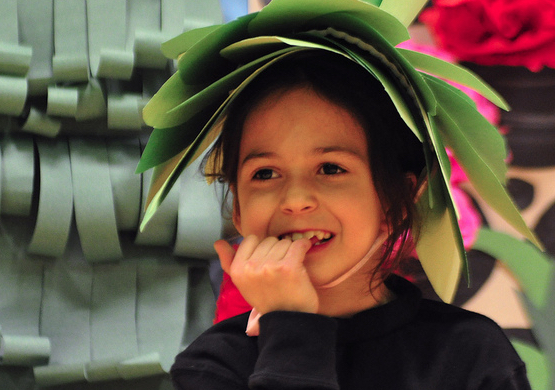
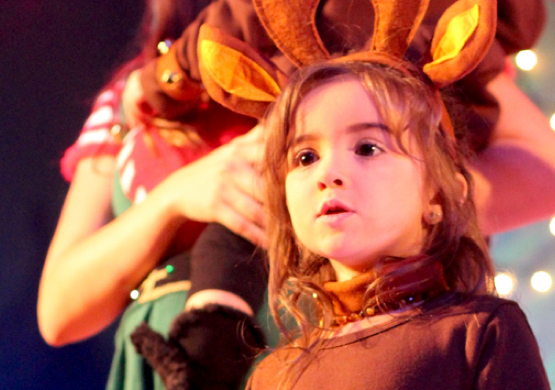
Elementary play is primarily used to make children aware of their emotions. These drama lessons are suitable for children aged 8 to 12. The lessons take place once a week. Children learn to acknowledge, recognize, and express their own feelings. Here too, Munda works in a client-centered manner.
Various working methods are possible, such as mirroring body movements, facial expressions, and feelings; role development; short monologues; and dialogues. Additionally, there are exercises to demand attention in a group versus being able to remain invisible. Depending on the specific issues and the child's age, work can also be done on short monologues—for example, starting from age 8-9 on the theme of heroes—to strengthen self-image.
Munda works with various themes depending on the needs of the child and the group.
A theme that comes up regularly is bullying. If necessary, work is done on the different roles within a bullying situation. Children become aware of the difference between teasing and bullying. Work is done on the children's resilience, including through the ‘I think I’m strong’ game. This strengthens self-confidence. For some children, it is important that creativity and imagination are stimulated. For children with attachment issues, the senses are stimulated through various warm-up exercises, cradle games, poems to help them relax, and body music. Play will often revolve around the theme of connection. For shy children, a safe atmosphere is important so that they dare to express themselves. During these lessons, both energetic and shy children become aware of the difference between self-respect and mutual respect.
Some children require play guidance or drama lessons before they can receive play therapy.
Where and when:
In Amsterdam Center (Therapeicum Weteringschans 74) on Saturday mornings, Amsterdam Sloterdijk (in a school), Amsterdam Lelylaan (refugee class), and the Kinkerbuurt, Amsterdam West (in a rented space), and Amsterdam North on Monday afternoons (in a rented space). We start in September, November, January, and March. Your child can join after an individual introductory session.
Where and when:
You can send your name and phone number by email to the following address: langen.van.m@hsleiden.nl, and I will call you back the same day. You can also leave your details on the contact form on this website.